REACH® by Jain Narrow Fabrics

Knowledge Center

Narrow fabric engineering guides, glossary & compliance

Practical technical reference material written for apparel merchandisers, sourcing teams, footwear engineers, and industrial buyers specifying narrow fabrics.

5

Technical Buyer Briefs

4

Construction Matrix

10

Glossary Terms

9

Audited Certificate PDFs

Technical Buyer Guides

Practical specification & sourcing briefs

Selection4 min technical brief

Choosing Between Woven, Knitted, Crochet, and Braided Elastics

Selecting the wrong elastic construction leads to waistband rolling, needle-cut elastomer failure, or premature stretch loss after washing. Match construction directly to stitching method and tension load.

  • Use woven elastics when the elastic is stitched directly through the tape or exposed as a structured waistband — woven structures resist rolling and hold high recovery.
  • Use knitted elastics for soft, breathable garments and direct skin-contact innerwear where comfort and low bulk outweigh heavy structural tension.
  • Use braided elastics primarily inside enclosed garment casings (sleeves, cuffs, drawstrings); avoid heavy zig-zag needle piercing directly through rubber cores.
  • Specify spandex/elastane cores instead of natural rubber when garments undergo high-temperature industrial laundering, stone-washing, or dry cleaning.
Procurement3 min checklist

How to Specify a Narrow Fabric for Accurate Sampling & Pricing

Clear technical specs eliminate development rounds and keep costing transparent. Use this checklist when submitting an RFQ or custom sample request.

  • Dimensions: Finished width in mm (with acceptable tolerance, typically ±1 mm on standard widths) and target thickness in mm.
  • Performance: Required elongation percentage (e.g., 80%–120% for woven, 110%–160% for knitted), recovery after stretch, or breaking strength in kgf/N for webbings.
  • Material & Core: Face yarn (polyester, nylon, cotton, PP, recycled GRS) and elastomer type (covered rubber vs spandex/elastane).
  • Finishing & Aesthetics: Shade reference (Pantone TCX/TPX or physical swatch), jacquard artwork if branded, functional finishes (silicone grip, DWR, FR, anti-microbial), and packaging format (rolls, spools, festooned cartons, or cut lengths).
Engineering5 min technical brief

Yarn & Elastomer Systems: Polyester, Nylon, Cotton, PP, Rubber vs Spandex

Fibre and core selection governs colourfastness, moisture management, abrasion resistance, wash durability, and unit cost across narrow fabrics.

  • Polyester (standard & high-tenacity): Excellent dimensional stability, UV resistance, crisp dye fastness, and cost-effective strength across elastics and webbings.
  • Nylon (Polyamide): Superior soft hand-feel, high abrasion resistance, and subtle sheen — preferred for intimates, bra straps, activewear, and premium luggage straps.
  • Cotton & Mercerised Cotton: Natural breathability and matte finish for twill tapes, drawcords, organic apparel, and Crosia (Torchon) lace.
  • Polypropylene (PP): Lightweight, hydrophobic, and economical for utility webbings, bags, furniture, and outdoor straps.
  • Natural Rubber vs Spandex (Elastane): Covered rubber offers strong snap-back modulus and competitive economics for standard apparel and furniture; spandex excels in heat resistance, finer gauges, latex-free medical use, and chlorine/wash durability.
Engineering4 min technical brief

Functional Finishes for Technical, Activewear & Medical Narrow Fabrics

Post-weaving and inline treatments turn base tapes and elastics into specialized performance components without changing garment assembly lines.

  • Silicone Grip Printing (wave, dot, stripe, or custom brand): Prevents garment slippage on activewear hems, cycling cuffs, and strapless intimates.
  • Water Repellent (WR/DWR) & UV Stabilization: Protects outdoor webbings, tents, pet gear, and automotive interiors against moisture uptake and sun degradation.
  • Flame Retardant (FR) & Anti-Static: Essential for PPE harnesses, industrial workwear, and specialized tactical/automotive components.
  • Anti-Microbial & pH 7 Water-Soluble Processing: Supports medical braces, orthopedic straps, and next-to-skin intimate wear while minimizing environmental impact.
Compliance3 min compliance brief

Understanding OEKO-TEX® Standard 100, GRS, ISO & BSCI for Trim Sourcing

Global apparel, footwear, and medical brands audit trim suppliers just as closely as main fabric mills. Here is what each certification verifies at our Kundli, Sonipat plant.

  • OEKO-TEX® Standard 100: Independently tests narrow fabrics for harmful chemical substances, ensuring human-ecological safety for skin-contact apparel and medical components.
  • GRS (Global Recycled Standard): Verifies recycled content chain-of-custody and responsible social/environmental chemical practices for sustainable buyer programs.
  • ISO 9001 & ISO 14001: Certifies documented quality management systems (lot traceability, PP approvals, corrective actions) and environmental management controls.
  • amfori BSCI & MSME ZED Bronze: Audits ethical workplace conditions, worker safety, and zero-defect, zero-effect manufacturing discipline.

Engineering Comparison

Woven vs Knitted vs Crochet vs Braided Narrow Fabrics

Compare how each narrow fabric manufacturing platform behaves under stretch, stitching, and daily wear before selecting an article for sampling.

ConstructionStructureWidth BehaviourHand-FeelBest ApplicationsTypical Widths
Woven (Needle Loom)Interlaced warp & weft yarns with locked selvedgeDoes not narrow under stretch (non-roll)Firm, crisp, high structural stabilityOuterwear & trouser waistbands, footwear gussets, heavy straps, medical & PPE6 mm – 180 mm
Knitted (Warp Knit)Interlooped warp stitches around elastomer coreSlight width retention, stays flat and breathableSoft, lightweight, gentle against skinInnerwear, athleisure, kidswear, lightweight waistbands, breathable medical wraps4 mm – 120 mm
CrochetOpen chain-stitch knitting with decorative edge capabilityFlexible stretch with open airflowSoft, airy, decorative picot / scalloped edge optionsLingerie trims, Crosia (Torchon) lace, soft garment casings, fashion edging5 mm – 120 mm
BraidedDiagonally intertwined yarns around parallel rubber/spandex coresNarrows slightly when stretched; very pliableFlexible, smooth, compact profileStitched garment casings, sleeves, round cords, mask earloops, shock cords1 mm – 25 mm

Industry Terminology

Narrow Fabric & Elastic Glossary

Elongation (%)
The maximum percentage an elastic tape stretches relative to its relaxed length under a defined load (e.g., 100% elongation means 10 cm stretches to 20 cm).
Recovery / Growth
How closely an elastic returns to its original length after being stretched and released. Low permanent growth indicates strong recovery and longer garment life.
WPM (Weight Per Meter)
Measured in grams per linear meter (g/m). Unlike broadwoven fabrics measured in GSM, narrow fabrics are commonly costed and verified by WPM alongside width and thickness.
Selvedge
The finished, self-bound longitudinal edge of a woven or knitted narrow fabric that prevents unravelling and ensures smooth feeding through sewing folders.
Jacquard Narrow Fabric
A woven or knitted elastic/tape where logos, typography, or intricate patterns are formed directly into the yarn structure rather than printed on top.
PP Approval (Pre-Production Sample)
A production-loom sample submitted for buyer confirmation of width, shade, hand-feel, and stretch prior to authorizing full bulk weaving.
Festooning vs Roll Winding
Two bulk packaging formats: festooning folds narrow fabric neatly in tension-free zig-zag layers inside cartons (preventing stretch distortion), while roll/spool winding suits automated cutting and retail distribution.
Covered Rubber Thread
An extruded natural rubber core wrapped in one (single-covered) or two opposing (double-covered) layers of polyester, nylon, or cotton yarn to protect the core and control stretch.
Crosia / Torchon Lace
A geometric bobbin-style lace characterized by clean, repeating openwork motifs, commonly called Crosia (or Crocia/Croshia) lace in South Asia and Torchon lace internationally.
Denier (D)
A unit of linear mass density for filament yarns (grams per 9,000 meters). Higher denier yarns produce heavier, higher-tenacity webbings and heavy woven elastics.

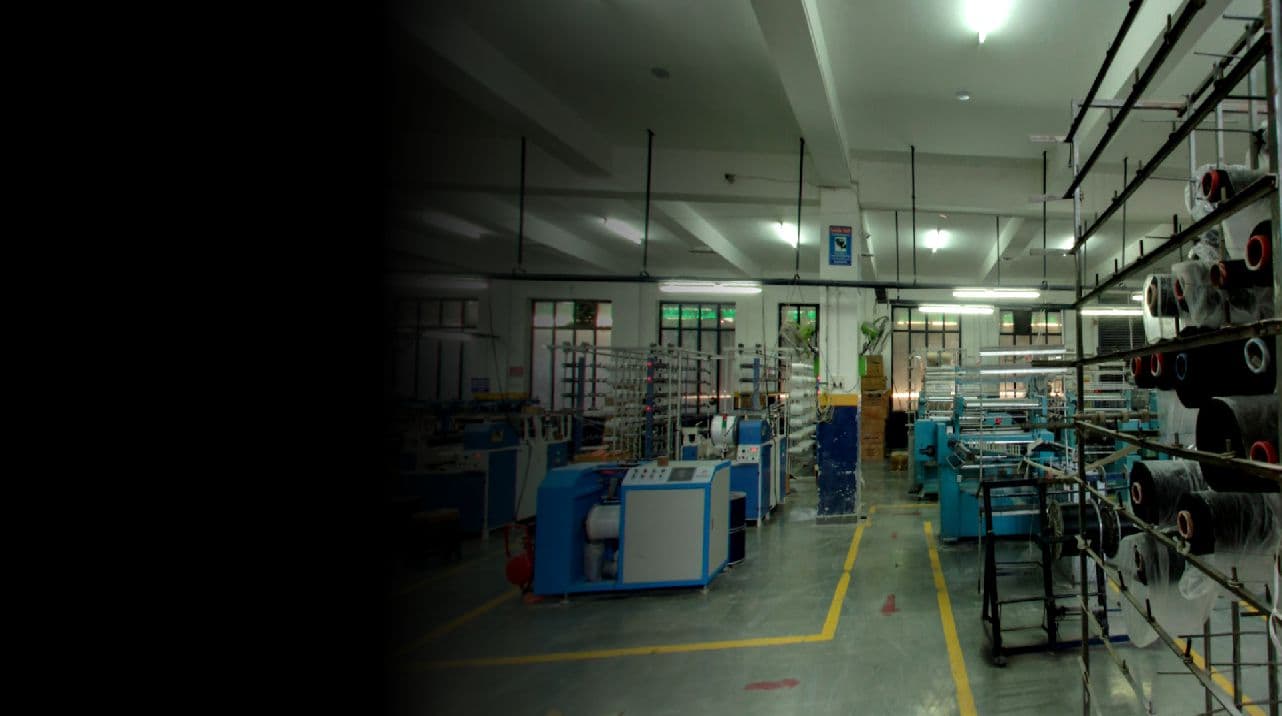
Verified Documentation

Download audited compliance certificates

Direct PDF access to our current product safety, quality management, recycled content, and social compliance documentation.

View all 9 certificates

Buyer FAQ

Common narrow fabric sourcing questions

Under the REACH® brand, Jain Narrow Fabrics manufactures eight narrow fabric families: Elastic Tapes (woven, knitted, crochet, jacquard, silicone-grip, plush, and medical), Braided Cord Elastics and Tapes, Webbings (PP, polyester, nylon, cotton, seat-belt, and tie-down), Non-Elastic Tapes (twill, herringbone, grosgrain, satin, and binding), Crosia (Torchon) Lace, Drawcords and Cords, Technical Narrow Fabrics, and Custom Engineered Products — alongside REACH® Aluminium Crochet Hooks.

Technical Support

Need help matching a physical sample or writing a specification?

Send our engineers a photo, width, or end-use brief — we will recommend the right construction, yarn blend, and finish.